
Business owners have been urged to prepare their enterprises to operate beyond their personal involvement by developing capable leaders, documenting critical knowledge, and establishing effective legal and governance structures.
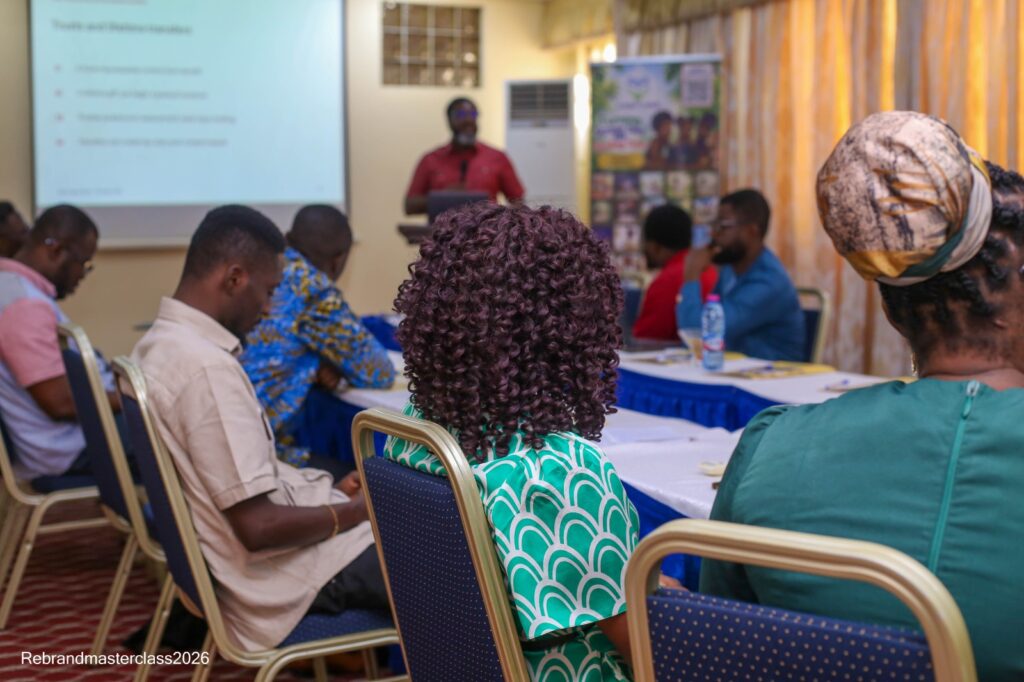
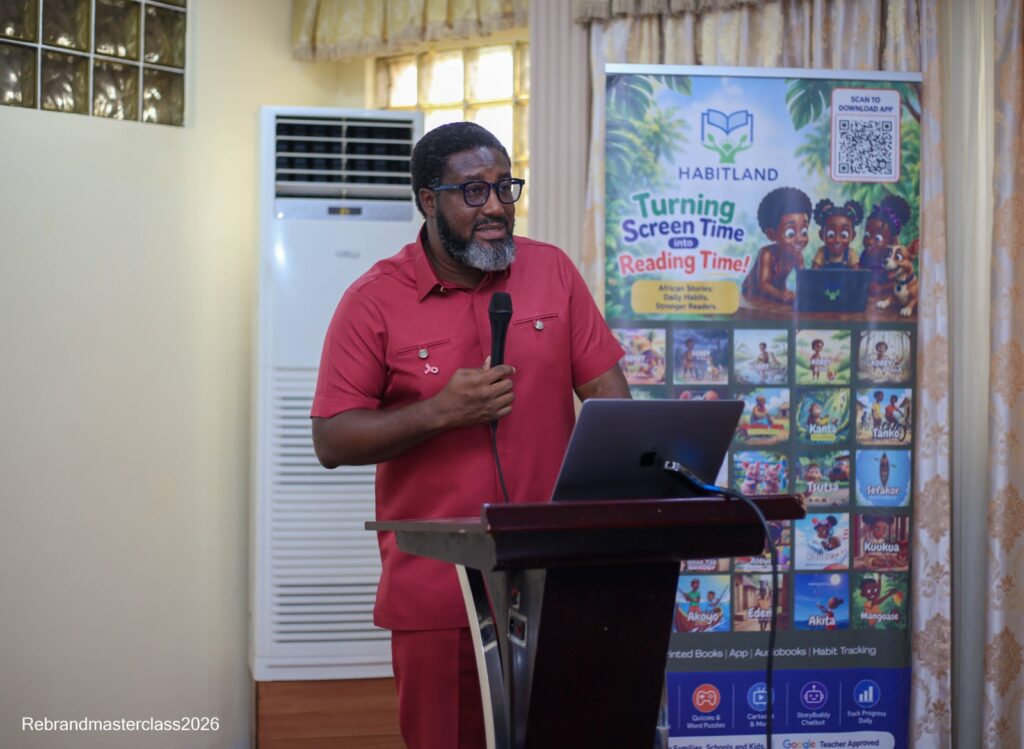
The call was made at the Rebrand Masterclass ’26, held at Charleston Hotel Ltd in Accra under the theme “Build Beyond You.” The Brand Legacy Edition brought together founders, chief executives, family business leaders, and entrepreneurs to explore how organizations can preserve their value and continue operating through leadership changes, unexpected absences, and generational transitions.
The programme featured author and brand strategist Bernard Kelvin Clive; Lom Nuku Ahlijah, Esq.; Samuel Koranteng Adjei of Nyansa Institute; and Jonathan Agyeman of FortifyID Systems Limited.
Their presentations examined how brand strategy, legal planning, corporate governance, and security technology can help businesses reduce dependence on their founders and establish systems for long-term continuity.
A central question challenged participants to consider whether their businesses could continue serving customers, making decisions, and meeting obligations if they became unavailable for 30 or 60 days.
The discussions highlighted the risks associated with concentrating essential knowledge, relationships, approvals, and daily operational decisions in one person, particularly in family-owned businesses and founder-led enterprises.
Preparing people and preserving knowledge
Bernard Kelvin Clive introduced the GRASS Legacy Framework from his book, Beyond You, which comprises Grooming, Records, Ambition, Systems and Solutions, and Succession.
The framework provides a practical approach to reducing founder dependence, developing future leaders, and preparing businesses for continuity.
Under grooming, Clive emphasized the importance of preparing potential successors before leadership vacancies arise. He said successors need opportunities to develop competence, judgement, and integrity through meaningful responsibilities.
Their ability to manage money, authority, pressure, and relationships should be demonstrated through experience rather than assumed because of family connections.
He also highlighted the distinction between family ownership and family management. Where relatives lack the preparation or interest required to run an enterprise, families can retain ownership while appointing qualified professionals to manage operations.
The Records pillar addresses the risks of keeping critical business knowledge in a founder’s memory or on personal devices. Procedures, contracts, customer information, financial commitments, creative work, and brand assets should be documented and made accessible to authorized personnel.
Clive identified audio, video, transcription, and digital storage as practical ways to preserve knowledge, particularly in traditional businesses where expertise is often transferred informally between generations.
He also highlighted the importance of intellectual property, including books, training materials, designs, and trademarks, whose value can extend beyond their creators when ownership and usage rights are properly documented.
Ambition establishes the direction and standards successors must understand, while systems and solutions translate that direction into repeatable processes. Clearly defined roles, approval limits, workflows, and reporting arrangements help employees perform consistently.
Succession brings these elements together through deliberate plans for transferring leadership and management responsibilities.
Legal planning to protect business legacy
Lom Nuku Ahlijah, Esq examined the legal arrangements required to protect founders’ intentions and minimize uncertainty during leadership transitions.
He stressed the importance of distinguishing personally owned property from assets belonging to a registered company.
A shareholder’s ownership of shares does not amount to personal ownership of every company asset. This distinction affects what can pass through a will and what remains subject to company decisions and documentation.
His presentation encouraged founders to align their wills, company records, shareholder agreements, insurance policies, and property documents with their succession plans.
Inconsistent arrangements can trigger disputes and delay critical decisions at a time when a business needs stability most.
Ahlijah also discussed planning for a shareholder’s death, incapacity, or proposed exit. Clear agreements can address valuation, share transfers, buyouts, voting rights, and dispute resolution.
He emphasized that verbal promises and family expectations should be supported by proper documentation and qualified professional advice.
Governance as a foundation for continuity
Samuel Koranteng Adjei presented corporate governance as a practical mechanism for directing an organization, holding management accountable, and protecting long-term value.
He noted that smaller enterprises, schools, churches, and family businesses also require clearly defined responsibilities and dependable oversight.
His presentation distinguished between ownership, board oversight, and day-to-day management. Although a founder may initially perform all three functions, recognizing their separate responsibilities makes delegation and eventual leadership transitions easier.
He encouraged businesses to build boards around the expertise and independent scrutiny they need. Board membership, he suggested, should extend beyond personal relationships or prominent names, with independent perspectives helping organizations challenge assumptions and address gaps in experience.
Effective oversight also depends on reliable information. Agendas, minutes, resolutions, policies, and action trackers help preserve decisions, while reports covering performance, cash flow, customers, operations, and risks enable leaders to identify problems and monitor corrective action.
Financial discipline, he noted, remains essential to protecting an enterprise’s ability to continue operating.
Technology and accountability in business operations
Jonathan Agyeman explored how security technology can help businesses operate without requiring constant supervision from their founders.
Video surveillance systems, access controls, attendance tools, and tracking devices can help organizations verify activities, protect assets, and identify departures from established procedures.
However, he emphasized that technology must operate within a clear response system. Recording an incident offers limited protection if nobody receives alerts, investigates what happened, or takes appropriate action.
Businesses must also prepare for power failures, connectivity problems, and compromised access credentials.
His presentation addressed responsible monitoring, including privacy, restricted access to information, and appropriate data retention periods. Security data should support fair investigations, while technology should reinforce clear expectations and accountable management.
Turning lessons into action
Across the sessions, participants were encouraged to identify activities that depend entirely on the founder, locate critical records, and clarify who has the authority to make essential decisions.
Documenting priority procedures, preparing potential successors and testing operations during a planned absence were highlighted as practical ways to identify weaknesses before a crisis occurs.
For enterprises built around a strong founding personality, the transition requires owners to share responsibility and give others the opportunity to exercise judgment.
The discussions also highlighted the need to prepare for both orderly handovers and unexpected interruptions, embedding business continuity into everyday decisions rather than waiting until retirement approaches.
The masterclass positioned legacy as the result of deliberate preparation, rather than ownership alone.
For founders and business leaders, the challenge is to build organizations whose purpose, standards, and customer relationships endure because capable people and effective systems can carry the enterprise forward.
Information about the next edition is available at www.bkc.name/rebrand or via WhatsApp on +233 244 961 121.

DISCLAIMER: The Views, Comments, Opinions, Contributions and Statements made by Readers and Contributors on this platform do not necessarily represent the views or policy of Multimedia Group Limited.
DISCLAIMER: The Views, Comments, Opinions, Contributions and Statements made by Readers and Contributors on this platform do not necessarily represent the views or policy of Multimedia Group Limited.
The post Rebrand Masterclass urges business leaders to build beyond the founder appeared first on Ghana News Online.


