
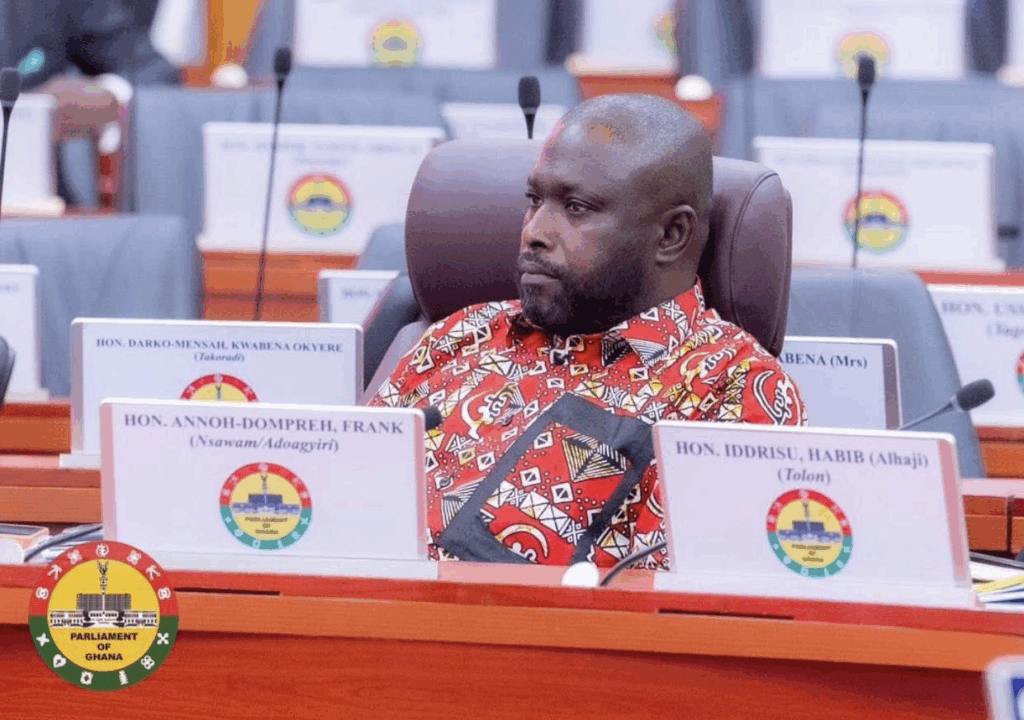
The Deputy Minority Chief Whip, Habib Iddrisu, has rejected the argument that ongoing court cases should prevent Parliament from investigating Ghana’s alleged role as a drug transit hub.
The Tolon MP strongly disagreed with the reasoning attributed to Speaker Alban Bagbin for refusing to admit the Minority’s motion seeking a parliamentary inquiry into the drug scandal.
The Speaker had cited concerns over ongoing investigations by state security agencies and cases already before the courts.
But speaking on Joy News’ PM Express on Tuesday, September 29, Mr Iddrisu said Parliament’s constitutional mandate to investigate should not be displaced by the Standing Orders.
“No, I strongly disagree with whether that is actually the reasoning of the speaker, because it’s part of the reason that he has given.”
He argued that the provisions of the Constitution should take precedence, particularly Articles 103(3) and 103(6).
“But I don’t think that what he actually quoted in our Standing Orders supersedes the provisions in the Constitution and Article 103, particularly when you look at the Constitution Article 103(3) and that of Article 103(6); it made it clear and gave Parliament that power.”
Mr Iddrisu pointed to the Speaker’s handling of the Kpandai matter as an example of Parliament acting despite an issue being before the courts.
“For instance, there are matters that have been before the courts, but yet Parliament makes decisions on it.”
He said the Kpandai case demonstrated that the existence of court proceedings did not automatically prevent the Speaker from exercising parliamentary authority.
“A typical example was when the Speaker read his ruling on the Kpandai matter. There was a court case. Did he say that because the case was in court, he was not going to do any ruling whether Martin Nyidam leaves his seat or not? He did not. He went ahead to do what he has to do as a Speaker.”
The Minority’s motion followed concerns over major cocaine seizures linked to Ghana and allegations that the country was becoming a transit point for illicit drugs.
The Minority had recalled Parliament to demand scrutiny of the circumstances surrounding the seizures and Ghana’s role in the international drug trade.
However, the Speaker rejected the motion, relying heavily on Standing Order 101(3)(F), which restricts motions relating to matters before the courts where parliamentary action could prejudice parties to the case.
Mr Iddrisu quoted the provision but argued that it must be considered alongside Parliament’s constitutional investigative mandate.
“But when you read the standing orders that the Speaker quoted to rely on or heavily rely on with regard to this matter, he said, ‘Standing Order 101(3)F, which says that a motion shall relate to defined issues and not, and then the F be the subject matter of an action in which a judiciary decision is pending, in such a way as may, in the opinion of the Speaker, prejudice the interests of parties to the action.’”
He then pointed to Article 103(3).
“But if you read the Constitution in Article 103(3), it states that a committee of Parliament shall be charged with such functions, including investigation, enquiry into activities, administration of ministers, departments as Parliament may determine, and such investigations and enquiries may extend to proposals for legislation.”
DISCLAIMER: The Views, Comments, Opinions, Contributions and Statements made by Readers and Contributors on this platform do not necessarily represent the views or policy of Multimedia Group Limited.
DISCLAIMER: The Views, Comments, Opinions, Contributions and Statements made by Readers and Contributors on this platform do not necessarily represent the views or policy of Multimedia Group Limited.
The post Habib Iddrisu rejects argument that court cases bar Parliament from investigating drug scandal appeared first on Ghana News Online.


